The basic component of our raw material, Neopor®, is a simple hydrocarbon that is also found as a flavoring agent in nuts, grapes, cinnamon, and kiwis: styrene.
History and Chemical Properties
The first polystyrene was extracted from the resin of the sweetgum tree by pharmacist Eduard Simon in 1835. Through polymerization, long styrene chains formed—polystyrene. In 1949, Fritz Stastny added pentane to polystyrene during polymerization. Pentane is an organic molecule that is also produced during natural fermentation processes. Pentane has no effect on the ozone layer because, due to its low chemical stability, it decomposes quickly, even in the lower layers of the atmosphere.
Manufacture of Expanded Polystyrene (EPS) Beads
Just as when corn is heated, pentane causes the long-chain polymers to expand, creating the familiar beads—expanded polystyrene (EPS) beads—commonly found in nursing pillows, beanbag chairs, and medical-grade vacuum mattresses.
Energy Efficiency and Structure
The extent of the expansion demonstrates just how energy-efficient EPS is: the pentane expands the polymer cell structure to 50 times its original volume. This means that 1 liter of EPS raw material yields 50 liters of high-quality EPS insulation material, which is resistant to both compression and bending. A bathtub full of EPS beads weighs just 2 kg.
The pearls are so brilliantly white because their wafer-thin cell membrane reflects light in all spectral colors—much like popcorn or snow.
The cellular structure—a simple hydrocarbon
Air Pockets and Diffusion
Under an electron microscope, you can see the multitude of air pockets. In expanded EPS panels, many small channels remain between the beads, through which air and water vapor can diffuse—similar to many small balls in a container. This diffusion significantly influences the building physics properties and, consequently, the quality of our MAGU Wall.
Diffusion of Pentane and Material Behavior
The volatile fermentation gas pentane diffuses out of the cell structure during the first few days and weeks after production and is replaced by our Hüfinger Black Forest air. As long as this process is ongoing, the material shrinks by 1–2 %, depending on its density. Afterward, the EPS remains dimensionally stable, moisture-resistant, and resistant to compression and tension.
Flame Retardancy and Material Composition
To prevent the EPS from catching fire, 1–2 % of a polymeric flame retardant, such as aluminum hydroxide or magnesium hydroxide, is added during the production of the raw material. These flame retardants are also used in cellulose or wood fiber boards. Bromine-containing flame retardants such as HBCD are no longer permitted, and we have not used them for years.
Benefits of the Graphite Content
Our silver-gray Neopor also contains 3–5 % of graphite—that is, pure carbon. The graphite in Neopor acts like a mirror and additionally reflects long-wave thermal radiation. This makes the insulation material more efficient. This additive reduces material usage by 20 % and simultaneously saves up to 50 % of valuable raw materials during production.
Stable Cell Structure and Life Cycle Assessment
The excellent environmental performance of our insulation material is due to the strong and stable cell structure of the polymer chains. This cellular structure makes Neopor not only lightweight, but also dimensionally stable and durable. Since it requires very little raw material but contains many air pockets, this allows for a particularly economical use of valuable raw materials.
Much like a beehive, cork, or a bamboo stalk, the honeycomb-like cellular structure ensures high stability thanks to millions of air pockets. These trapped air bubbles prevent heat loss, much like an air mattress: lightweight, yet filled with a large volume of air, making it an effective heat reservoir.
One cubic meter of Neopor weighs only 30 kg. Three buckets of raw material are enough to produce 5 to 10 m² of building insulation. By contrast, a wood fiber board with similar insulating properties requires ten times as much material—about 300 kg per cubic meter. This means ten times the amount of material, which must be sourced from wood, processed, and pressed into a wood fiber board using resins and flame retardants.
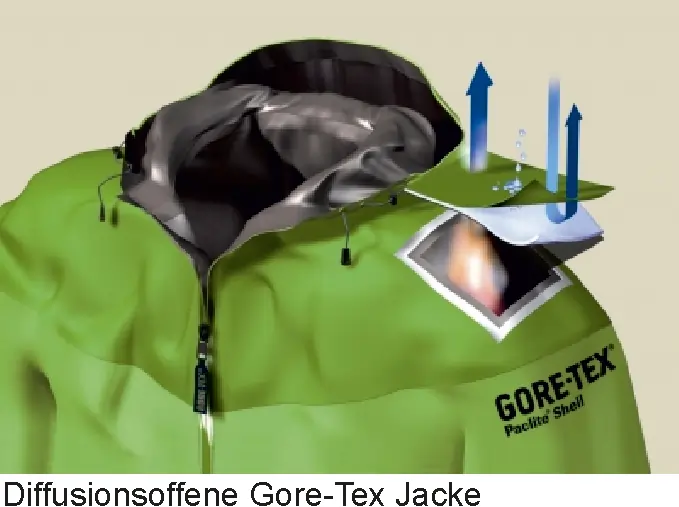
Breathable, just like performance clothing
Just as modern functional clothing—such as sports jackets or shoes with soles made of high-quality plastics—has replaced traditional materials like cotton underwear, wool sweaters, or leather soles, EPS has become indispensable in the insulation and construction industries. This insulation material combines practical, ecological, and economic benefits.
Energy Savings Through Efficient Thermal Insulation
EPS is a material that poses no health risks and is used millions of times worldwide. Although the raw material comes from fossil fuels such as petroleum, it achieves significant energy savings when used as thermal insulation. Within just 1–2 years, EPS can already save more energy than is required for its entire extraction, production, and intended recycling (see life cycle assessment).
Minimal primary energy consumption and recyclability
The amount of gray energy—that is, the energy required for manufacturing—is generally negligible for insulation materials, especially when compared to the enormous energy-saving potential during their use. Even wood fiber boards, which require twice as much gray energy to manufacture as Neopor, still save many times the energy used in the long run.
EPS also stands out for its excellent recyclability: Thanks to its simple chemical structure, EPS can be easily separated using modern machinery in a water bath. This makes it possible to recycle EPS 100 % as a raw material without any loss of quality.
Thermal recycling as a last resort
If EPS is ultimately incinerated at the end of its life cycle—similar to cellulose, wood fiber boards, or straw—it releases the stored CO₂ back into the atmosphere. Nevertheless, thermal insulation remains one of the most efficient methods of saving energy throughout its entire service life, meaning that even the least environmentally friendly form of disposal—incineration for energy recovery—is more climate-friendly than direct heating with fossil fuels such as gas, coal, or oil.
Bees feel right at home in EPS
EPS as a Sustainable Raw Material for Beehives
As already described under „Life Cycle Assessment,“ the total amount of raw materials used to build a MAGU KFW 40 house is comparable to the energy contained in 2,500 liters of heating oil. This amount is roughly equivalent to the energy required by a mid-size car to travel a distance of 15,000 km.
Our EPS is physiologically safe and is even approved for use as food packaging. It does not provide a breeding ground for mold or microorganisms and is therefore also suitable for sensitive beehives. For decades, bee colonies have thrived in EPS beehives.
Stability and Biodegradability of EPS
EPS is resistant to aqueous alkalis and mineral acids, but is susceptible to nonpolar solvents such as gasoline or certain ketones. UV light breaks down the polymer chains in styrofoam, causing the surface to yellow and the material to slowly decompose into its basic components—carbon and water. When exposed to the elements, EPS decomposes within a few years and is therefore environmentally sustainable in the long term.
Mealworms as Natural EPS Recyclers
Mealworms can also break down EPS. Studies show that these insects can use polystyrene as a food source. They consume about 35 mg of EPS daily, digest it efficiently, and excrete it as biodegradable feces. These findings could influence future sustainable recycling methods.