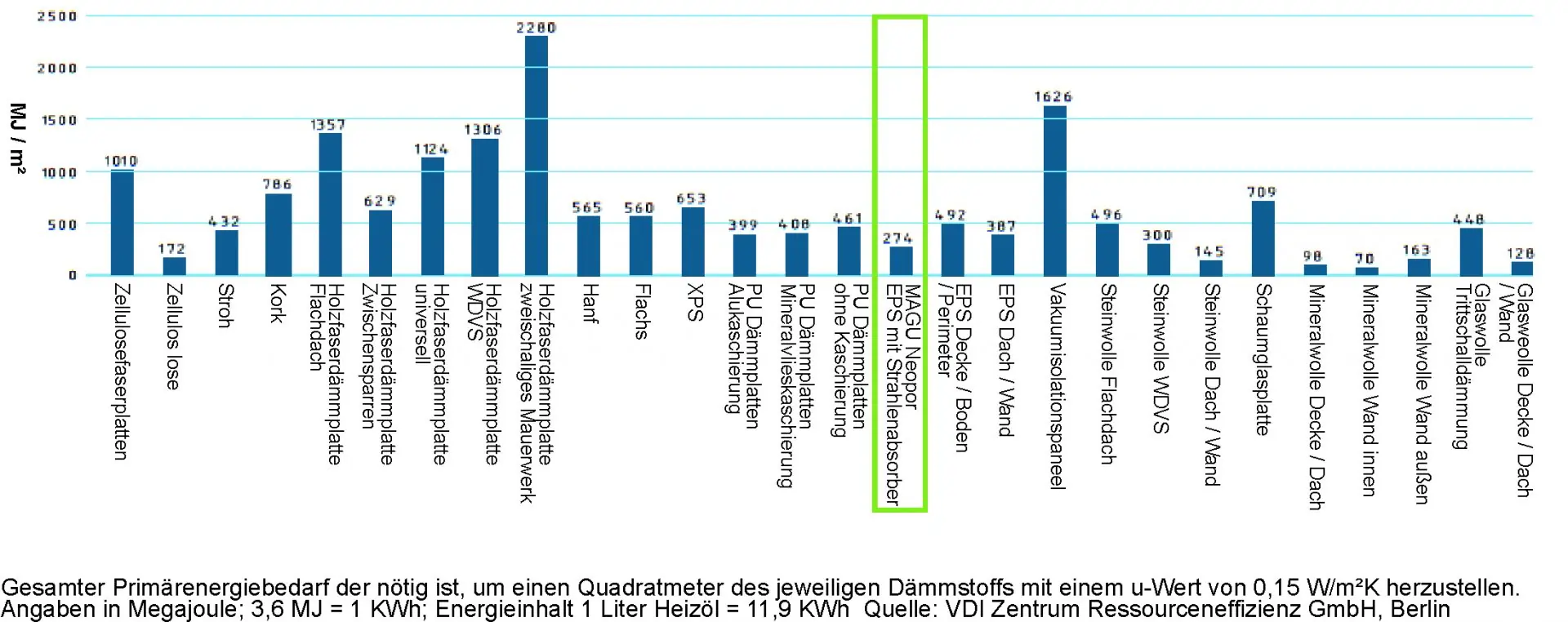
What's surprising is that these values apply to just one square meter of wall.
Here's an example:
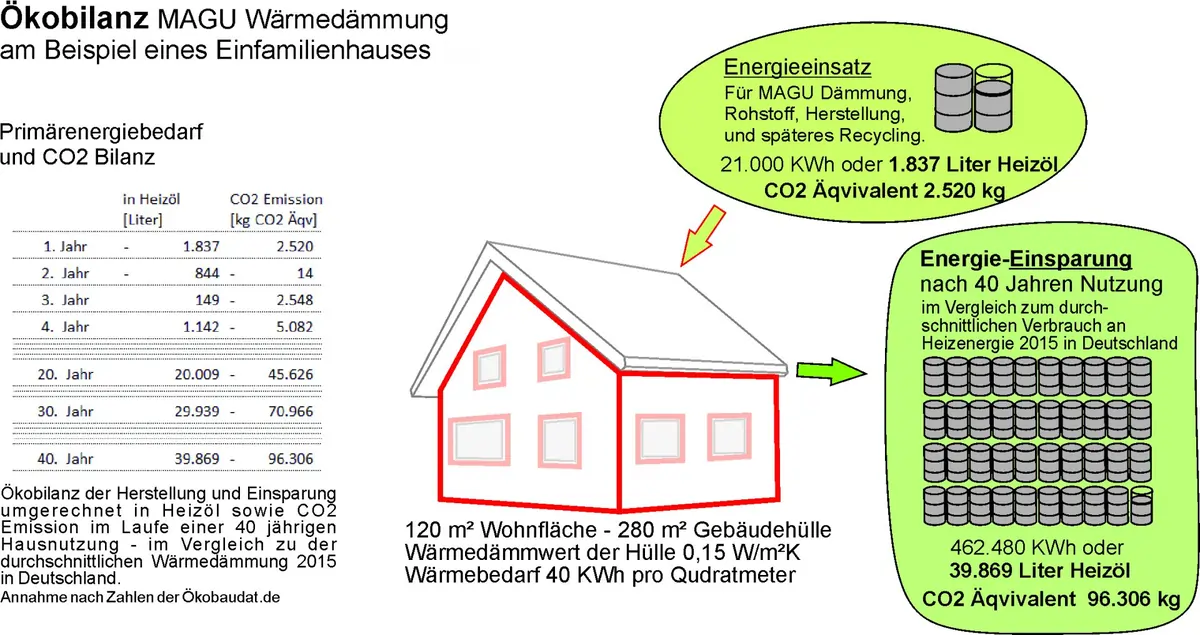
The primary energy required to manufacture thermal insulation with a U-value of 0.21 W/m²K averages 70 kWh. However, the savings achieved over 40 years amount to 4,101 kWh of heating energy—more than 50 times as much (compared to the average insulation standard).
For a 150 m² facade, this corresponds to energy savings of 615,150 kWh over 40 years—which is roughly equivalent to 61,500 liters of light heating oil. Compared to the current German thermal insulation standard, this is equivalent to the savings achieved by a hollow-core brick wall.



The weight of a solid building limits the extent to which it can be prefabricated and transported. Solid houses are usually built on-site, either by laying brick or pouring concrete. The construction phase lasts several months and is inevitably exposed to the elements, which is why the drying phase after the roof is installed can also take several months.
At the very latest, however, by the time the electrician connects the doorbell, the house will have only a minimal amount of residual moisture left, which will disappear completely after the first heating season.