MAGU Swiss AG Logo
0.00 CHF 0

Cart

No products in the cart.

MAGU Swiss AG Logo
0.00 CHF 0

Cart

No products in the cart.

Thermal Insulation

Warmth as the Foundation of Comfort

Warmth means comfort and is the basic prerequisite for healthy living and personal well-being within your own four walls.

This insight is as old as humanity itself—even our ancestors used to gather around a warming fire.
A cozy atmosphere with warm wool socks in front of a roaring fire—a symbol of comfort and warmth.
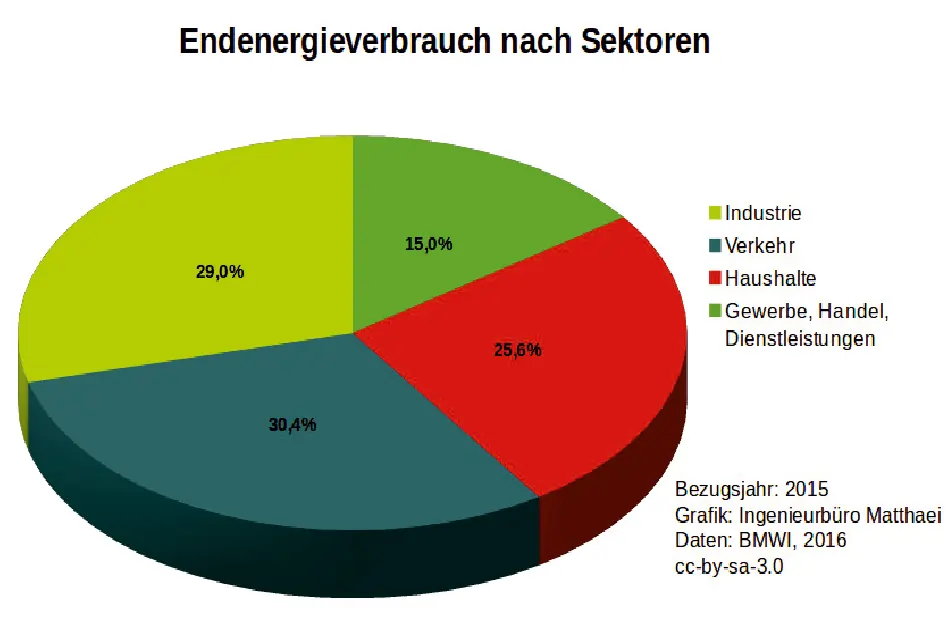
A pie chart showing final energy consumption by sector in Germany, illustrating the share of industry, transportation, households, and commerce, trade, and services.

The Energy Crisis as a Turning Point

The 1973 energy crisis was a wake-up call: We realized that fossil fuels are scarce, finite, and expensive. In addition to transportation and industry, we in Germany use nearly 30 % of our total energy just for heating and cooling our buildings.

In response, the first legal requirements were established in 1976 with the Energy Conservation Act. In the years that followed, the Thermal Insulation Ordinance (WSVO) and the Energy Conservation Ordinance (EnEV) were enacted.
Architects, engineers, and the construction industry have had to adapt in order to build more energy-efficiently.

Challenges of Thermal Insulation

As with any change, the introduction of new thermal insulation measures also drew criticism. Many questioned the purpose of these measures and feared they would entail additional effort.
In the process, building owners and designers have found that a single thermal insulation measure is often not enough—and can sometimes even lead to problems, such as moisture and mold growth.
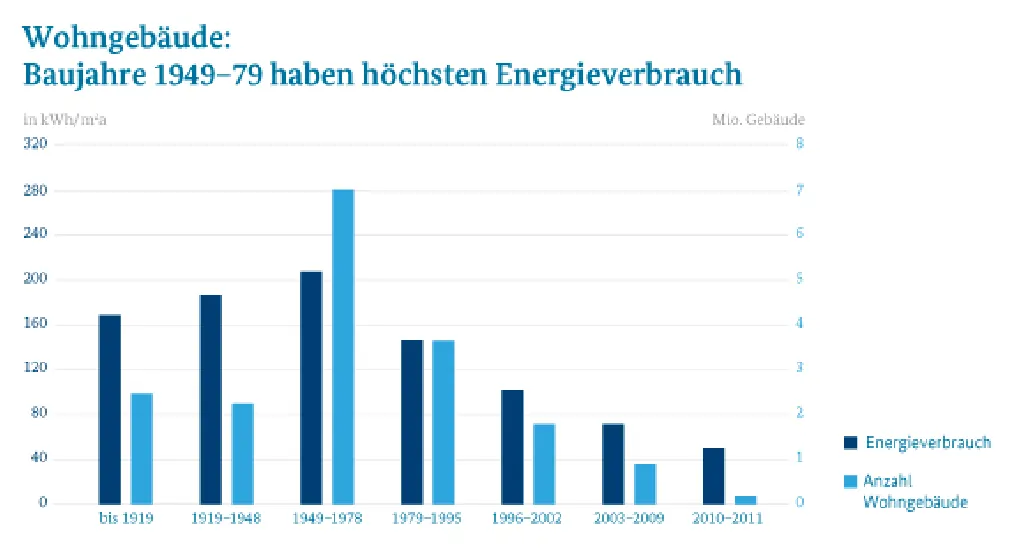
A bar chart showing the energy consumption of residential buildings by year of construction, indicating that buildings constructed between 1949 and 1979 have the highest energy consumption.

One example of this is the prefabricated buildings from the 1990s that were retrofitted with Styrofoam insulation. What happened?
  • The facades were insulated and new windows were installed.
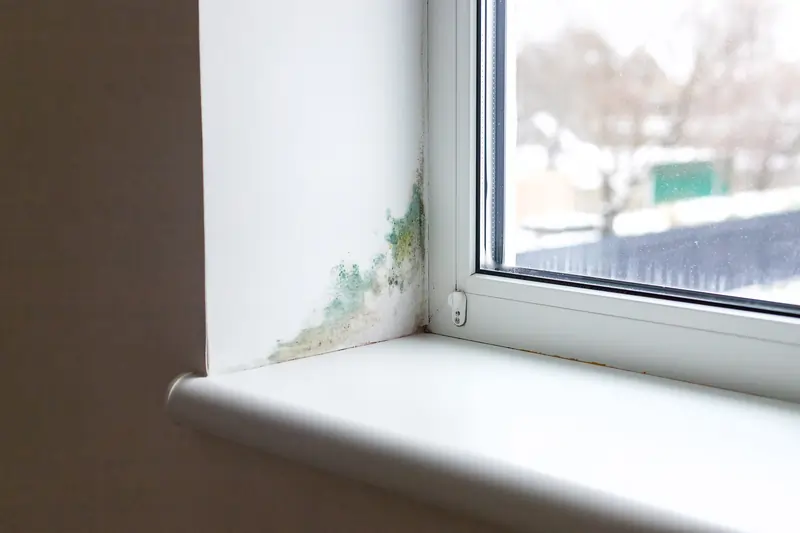
  • Suddenly, „sweat“ appeared on the window jambs.
  • It was quickly claimed that the new windows were „too airtight“ and that air circulation was no longer possible.
Mold growth on a window reveal due to a thermal bridge caused by insufficient insulation.

Why Do Mold Problems Occur?

The real cause lay elsewhere: The window reveals were not insulated, which created a thermal bridge.
The air in the room condensed on these cold spots—much like a fogged-up bathroom mirror.
The result: moisture and mold growth.

Thermal Insulation and Air Quality

A healthy home requires even temperature distribution.
People used to believe in the concept of „breathing walls“—but that’s a myth.
Today, it's clear:
  • An airtight building envelope is important for energy efficiency.
  • It prevents uncontrolled moisture ingress.
  • Ventilation should be done deliberately and purposefully, not through uncontrolled cracks or gaps.
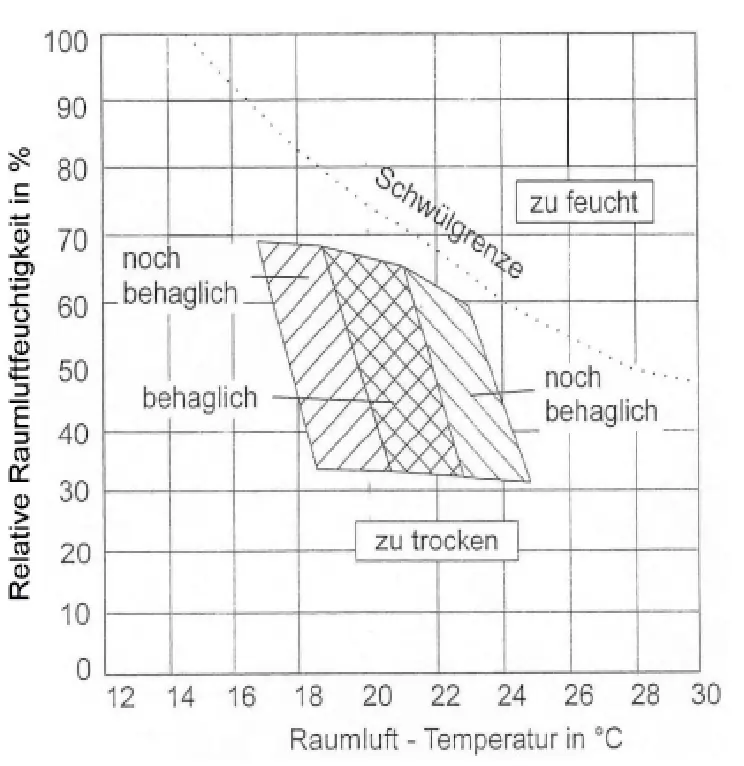
Chart showing the optimal indoor humidity and temperature for a comfortable indoor climate, including the humidity threshold and the dryness range.
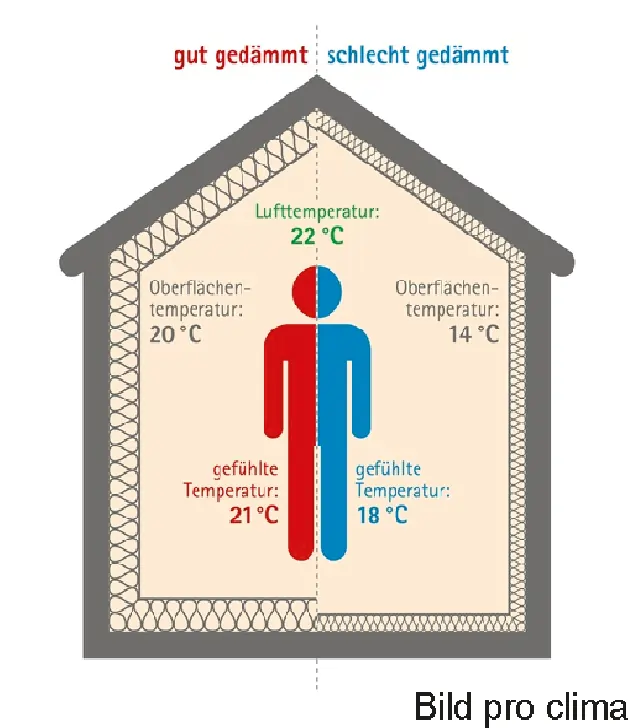
Comparison of Well-Insulated and Poorly Insulated Homes: Effects on Air Temperature, Surface Temperature, and Perceived Indoor Temperature.

Comfort Through the Right Room Temperature

The way people perceive heat varies from person to person.
Nevertheless, the general comfort range is between 17 and 24°C.
The surface temperature of the building envelope provides information about its insulating effect:

  • If the wall is cold despite the high room temperature, a lot of heat escapes outside.
  • This leads to drafts and thermal bridges, which in turn can cause mold.

Humidity & Ventilation – A Balancing Act

The human body produces its own moisture:

  • Breathing, cooking, showering—all of these activities release water vapor.
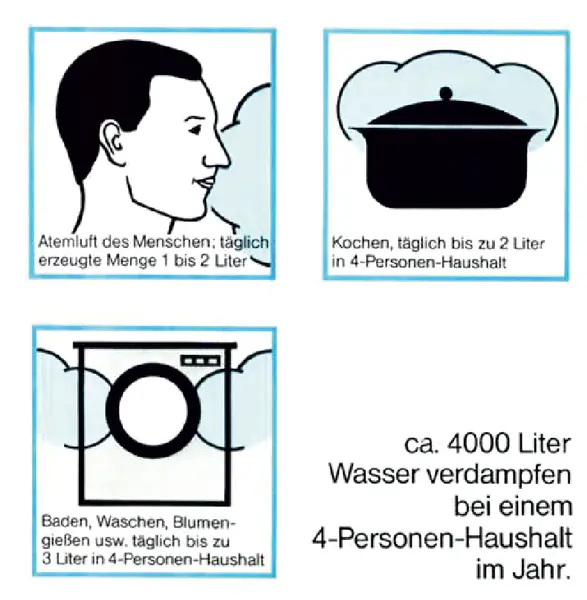
  • A family of four produces 1.4 liters of water just from breathing during the night.
  • Cooking produces 1,000–3,000 g of water vapor per day, while showering produces about 1,000 g of water per person.

What happens if this moisture doesn't escape?
  • It collects in cold corners and crevices.
  • Condensation forms.
  • Damp spots become the perfect breeding ground for mold spores.
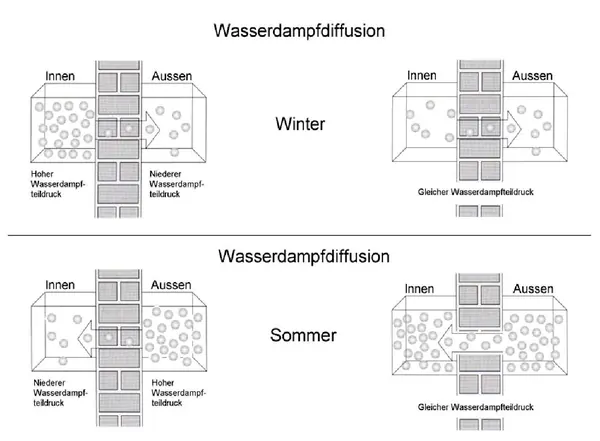
Schematic illustration of water vapor diffusion in walls in winter and summer: Differences in vapor pressure between indoor and outdoor air.

The solution:

  • Targeted ventilation through windows or via a controlled residential ventilation system with heat recovery.
  • An airtight building envelope that allows for controlled moisture exchange.
Infographic showing daily moisture production in a 4-person household from breathing, cooking, washing, and other activities, with a total of approximately 4,000 liters of water evaporation per year.

Conclusion: Thermal Insulation for Healthy Living

  • Thermal insulation reduces energy consumption and heating costs.
  • Properly installed insulation prevents structural damage and mold.
  • An airtight building envelope combined with targeted ventilation ensures a healthy indoor environment.
© 2026 MAGU Swiss AG. All rights reserved.